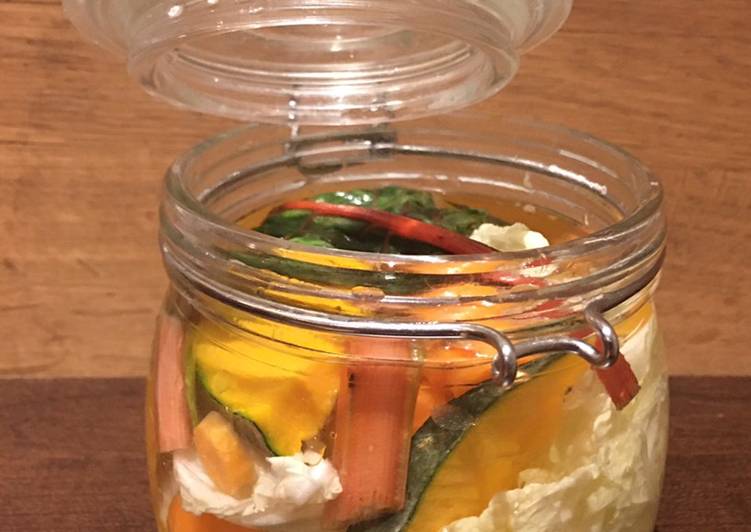
Hello everybody, it is John, welcome to our recipe site. Today, we’re going to prepare a distinctive dish, fermented seasonal vegetables 🌱. It is one of my favorites food recipes. This time, I will make it a little bit tasty. This is gonna smell and look delicious.
Fermented vegetables begin with lacto-fermentation, a method of food preservation that also enhances the nutrient content of the food. The action of the bacteria makes the minerals in cultured foods more readily available to the body. The bacteria also produce vitamins and.
Fermented seasonal Vegetables 🌱 is one of the most popular of current trending foods on earth. It is enjoyed by millions daily. It is easy, it is fast, it tastes yummy. They are fine and they look wonderful. Fermented seasonal Vegetables 🌱 is something which I’ve loved my entire life.
To begin with this particular recipe, we must first prepare a few components. You can cook fermented seasonal vegetables 🌱 using 6 ingredients and 5 steps. Here is how you cook that.
The ingredients needed to make Fermented seasonal Vegetables 🌱:
- Make ready 1 clean jar
- Make ready Filtered water (I use a charcoal stick to filter)
- Get A selection of seasonal veg
- Get Seasalt flakes (see below)
- Take A selection of hard herbs and/or spices - I used mustard seeds in this one
- Take Ginger and/or garlic and/or chilli
We have fermented vegetables many times without adding a starter culture. This is called a Just added to seasonal stuffiness , sinus pain, and head aches. Many different seasonal vegetables may be fermented to prolong how long they are edible, such as asparagus, beets, cabbage, carrots, cilantro, fennel root (anise), garlic, green beans, etc. Ayurvedic and Indian fermented foods are often combined with anti-inflammatory herbs and spices.
Instructions to make Fermented seasonal Vegetables 🌱:
- Clean the jar well. I used soapy water and popped it in the oven like you would when making pickles.
- Wash the veggies and chop to desired size.
- Using an electronic scale, place on your jar and return to zero. Fill the jar with your veg and spices. Using a jug of water, cover the veg to the top until they are fully submerged. Record weight total.
- Tip the water back into the jug. Do the maths to work our 2.5% of the recorded weight total. Add this quantity of salt to the water and stir until dissolved. Tip (now salty) water back until the jar until the veggies are submerged.
- You need to weight the veggies down so that they stay under the water. You can do this with a fermenting stone, a water bag or as I used a saucer with water poured on top. Secure the lid lightly without using the seal as it may explode. You can seal when it goes in the fridge. Leave to ferment for up to 7 days. Expect to see bubbles and life as you would sourdough. Store on a plate (see my sourdough 🤣)
Fermented vegetables are the ideal companion to any meal. They are loaded with probiotics, can improve digestion and incredibly easy to make at home. Simple Fermented Vegetables. *This post may contain affiliate links. The earnings go back to supporting the content created on this site. Fermented vegetable products have common characteristics of high acidity and low pH that usually make them safe and microbiologically stable all along their shelf life.
So that is going to wrap it up with this exceptional food fermented seasonal vegetables 🌱 recipe. Thanks so much for your time. I am sure that you can make this at home. There’s gonna be more interesting food in home recipes coming up. Remember to bookmark this page in your browser, and share it to your family, friends and colleague. Thank you for reading. Go on get cooking!